Insights

Aug. 4, 2018

What Are the Kakaako (HCDA) 2018 Reserved Housing Requirements?

The Kakaako neighborhood in Honolulu, Oahu has quickly become one of the most thriving residential communities that offers Hawaii residents unique housing options for those who wish to live closer to Honolulu’s business district to reduce their daily commute time. The flourishing neighborhood of Kakaako offers its residents a place to live, work, play and shop with a variety of exclusive restaurant, shopping and entertainment options all just footsteps away from their front door. 

Reserved housing available in the Kakaako neighborhood is composed to provide affordable housing options for buyers who earn less than 140% of the Honolulu area median income (AMI) as established by the United States Department of Housing and Urban Development (HUD). The current AMI for 2018 is $96,000.00 and 140% of that amount is $134,400 for a family of four.

In order to purchase a reserved housing option, individuals must go through a qualifying process to ensure that they fall within the Honolulu Community Development Authority (HCDA)’s reserved housing requirements along with lender requirements.

HCDA Income Requirements for Reserved Housing Qualification

  1. The applicant’s “adjusted household income” cannot not go over 140% of the AMI. For a example, a single person’s income cannot go over $94,100.
  2. The “adjusted household income” refers to the total income, which is before personal deductions and taxes. This will include anyone who will be living in the applicant’s household and includes, and is not limited to, social security payments, retirement benefits, wages, unemployment benefits, interest and dividend payments. It does not include business deductions.
  3. The applicant’s assets, like bank accounts, mutual funds, etc., cannot exceed 125% of the AMI.

Qualifications for a Buyer of Reserved Housing Homes

  1. Applicant must be a citizen or resident alien of the United States.
  2. Is a bona fide resident of Hawaii.
  3. Must be 18 years old or older.
  4. Applicant cannot have a majority interest in principal residence or beneficial interest in a land trust on a principal residence within or without Hawaii for a period of three years immediately prior to the date of application for a reserved housing unit. This also applies to the spouse of an applicant if he/she is married.
  5. Applicant must be the owner and occupant of the reserved housing unit.
  6. Applicant has never purchased a reserved housing unit in the past.

How Applicants Can Be Qualified for Reserved Housing

The Approved Project Lenders will qualify applicants both for the Reserved Housing program and for a home loan. To verify the applicant’s eligibility, lenders will require the following documents:

  1. 2 to 3 years of tax returns (Must include 2015)
  2. Most recent W2
  3. Recent pay stubs
  4. Verification of assets
  5. Gift letter with verification of funds (if applicant is receiving assistance with the down payment for the unit)

Process for Reserved Housing Application & Unit Selection

An announcement will be made in the Star Advertiser to specify when applications will be available for pick up at the project sales office of the building. The application will detail all information on the application and unit selection process. The general process is as follows:

  1. Pick up application from building’s project sales office.
  2. Work with an Approved Project Lender (specific lenders listed in application) in order to get a prequalification letter.
  3. Submit the completed application
    1. Must have prequalification letter from lender and two required affidavits.
  4. Each applicant that is qualified will be placed on a property selection list in the order in which completed applications were received.
  5. A unit selection event will then be held for applicants to choose their unit and sign a sales contract.
  6. If all units are not sold during the unit selection event, applications will continue to be accepted on a first-come-first-served basis until all units are sold.

How Much is the Down Payment for A Reserved Housing Unit?

The developer can require up to a 10% down payment on the reserved housing unit that is for sale. The buyer of the unit is able to place a larger down payment if they would like to or if it is recommended or required by the lender.

What Makes A Reserved Housing Program Application Complete?

In order to have a completed Reserved Housing Program Application, applicants must provide a prequalification letter from a listed Approved Project Lender, two signed and notarized affidavits that (1) confirm eligibility for the reserved housing program and (2) the applicant’s intent to comply with the program restrictions.

Posted in Buyer's Guide
Aug. 4, 2018

How to Apply for HCDA Affordable Housing in Hawaii

According to the Honolulu Board of Realtors, condominium prices have risen over the past year and now average at a median sales price of $420,000 with an average sales price of $508,805, so it is easy to see why many of Oahu’s residents still find themselves renting versus choosing to buy their own home.

This is where reserved housing and affordable housing units fill in the gaps for Hawaii’s residents to afford a home in the newly planned high-rises that will soon fill Kakaako and Ala Moana. But what is reserved housing and affordable housing and how can individuals apply or even qualify for these lower-cost homes? Let’s find out in this quick post.

Oahu Living: Affordable Housing vs. Reserved Housing

Affordable housing and reserved housing are two peas in the same pod, the difference lies in the state organization that it is managed by. Reserved housing is under the control of the Hawaii Community Development Authority (HCDA), whereas affordable housing is run by the Hawaii Housing Finance and Development Corporation (HHFDC).

Another difference between the two lies in the amount of time individuals can stay in the unit. Reserved housing has 2, 5 or 10 year periods, while affordable housing units have a 10 year period--this can also vary greatly between each development.

Please note: All of the requirements and eligibility restrictions outlined below are subject to change. Approved sales projects will also have their own specific income and asset requirements, use, sale and transfer restrictions.

How to Qualify for the HCDA’s Reserved Housing

Before any individual can apply for the HCDA’s reserved housing, eligibility must be determined via the major requirements below:

  1. Must be a Hawaii resident that is 18 years or older and will be an owner and occupant of the home that is purchased.
  2. Individual must not have any majority interest in a primary residence within the last 3 years.
  3. Individual must fall within the HCDA’s Income & Net Asset Limits. View the HCDA’s Income Limits for 2018*
  4. Individual has not purchased a reserved housing unit before.

*HCDA units cap off at 120% to 140% of the Area Median Income (AMI), this is decided by the HCDA when a project is approved of and terms set for that specific project.

HCDA Asset Verification

125% Assets Limits for 2018

  • 1 Person: $117,625
  • 2 People: $134,375
  • 3 People: $151,188

What is Included Under Assets

  • Securities
  • Cash
  • Real & personal property at fair market value, such as stocks, CDs and mutual funds

*Gifts & retirement accounts (401K, IRA & Life Insurance) are not included

HCDA Income Verification

140% AMI for 2018

  • 1 Person: $94,100
  • 2 People: $107,500
  • 3 People: $120,950

Assistance to Qualify for HCDA Requirements

  1. Co-Signer Can Be Used
    1. Can be anyone, does not have to be a relative.
    2. Loan application and income verification will be needed from co-signer.
    3. Co-signer can’t be on the title.
  2. Gift Letter (As a Downpayment)
    1. Must come from a relative.
    2. No limit on amount.
    3. Relative can’t be on the title.
    4. Can’t be a cash transfer to the applicant.

How to Qualify for the HHFDC’s Affordable Housing

Before any individual can apply for the HHFDC’s affordabe housing, eligibility must be determined through the requirements below:

  1. Must be a Hawaii resident that is 18 years or older and will be an owner and occupant of the home that is purchased.
  2. Applicant must not own any majority interest in a home at the time of application.
  3. Individual must fall within the HHFDC’s Income & Net Asset Limits. View the HHFDC's Income Limits for 2018*
  4. HHFDC has no asset limits and allows the buyer to pay cash instead of having to get a loan. The buyer can also put down more cash in order to get a smaller loan and allows buyers to qualify with a lower income if they have more assets.

*HHFDC units usually cap off between 80% to 140% of the AMI. This is decided by the HHFDC on approval of a project and when terms are set for the specific project.

How to Apply for the HCDA or HHFDC’s Reserved & Affordable Housing

If an individual meets the above requirements for either the HCDA or the HHFDC’s reserved and affordable housing, the next step is to speak to a project lender, whose approval is needed in order to obtain a pre-qualification letter. Project lenders can differ from project to project.

In order to receive the pre-qualification letter, the applicant must provide the chosen lender with the following:

  1. Three years of tax returns (Using 2018 as an example, tax returns from 2017, 2016 and 2015 would be needed).
  2. Most recent W2 document.
  3. Most recent pay stubs.
  4. A document that verifies the applicants assets.
  5. If receiving assistance with a down payment, a gift letter from a relative with verification of funds.

After receiving a pre-qualification letter form a chosen project lender, the applicant would then be able to send in their application to the specific condominium that they are interested in purchasing a home from. Each approved project will have their own set of qualifications and paperwork, but if an individual meets the requirements listed above, they are on the right track to be able to purchase a reserved or affordable housing unit in Honolulu.

Posted in Buyer's Guide
Aug. 4, 2018

HOA Costs vs. Single Family Home Costs

For most homebuyers, especially on the mainland, many look at purchasing a single family home versus buying a condominium. But living in Hawaii, specifically in Honolulu, a lot more buyers are turning towards condo-living. In fact in Honolulu 50% more residents have chosen to buy and live in condominiums versus a single family home--in 2017 just last year, 5,824 condos were sold compared to only 3,908 single family homes.

Some choose to purchase a single family home because perhaps, they have always lived in a single family home and are more comfortable with the lifestyle or they are concerned with the amount the HOA or homeowners’ association maintenance fees may cost them monthly. So how do the monthly HOA fees in terms of owning a condo compare to the type of costs a buyer may face when purchasing a single family home? Let’s compare the two below.

What Are HOA Fees & What’s the Average Cost in Oahu?

Condominium HOA fees are costs that are paid to the homeowners’ association whose job it is to maintain the community’s common areas. Common areas include landscaping, parks, recreation area, swimming pools, and clubhouses, just to name a few. For some condos, HOA fees may also include sewage, water, security and on some occasions, cable, electricity and Internet.

Condo fees are set by the HOA and are mandatory to the residents staying in the building. Though for some homebuyers the cost of condo HOA fees may be a concern, as they don’t want the extra monthly costs tied to their mortgage. But there is added value in the fees as mentioned above, maintenance for common grounds are what HOA fees cover for condo communities, but typically HOA fees will also include a building’s flood, fire and hurricane insurance.

HOA fees in Honolulu will run between ~$0.60 to ~$1.50 per square foot and depending on the size of the condo can cost around $350 to $1,000 per month. Though a condo owner will have less control over their residence compared to buying a single family home, the maintenance of common areas, building amenities and added insurance coverage can be a more appealing choice.

What Are the Costs of Owning A Single Family Home in Oahu?

Single family homes in Oahu do not have HOA fees unless the house is located in a private community and according to Oahu Real Estate Report now have a median cost of around $778,000. Instead of having monthly HOA fees that take care of maintenance, a single family home will require its own maintenance.

A single family home will allow a homebuyer the most freedom and control over their home, but on top of the monthly mortgage payment, the costs of maintaining the home is left solely on the homeowner. These types of regular maintenances include things like painting the home every ten years (shorter if living by the ocean), re-roofing around 25 years, pool resurfacing in ten years, landscaping, pool maintenance and homeowner’s insurance, which over the years can average in the thousands and require the owner to either put in the work themselves or pay professionals for services, which would cost more.

On top of these types of maintenances, a homeowner is also responsible for the monthly costs of utilities such as sewer, water, electricity, cable, internet services and security alarm services, which can average over $100 to $250 a month per utility paid directly to the company offering the service, which can add up quickly to over $1000+ per month just for utilities. Owners of single family homes are also required to have money budgeted in case of repairs needed to the exterior of the home.

The bottom line is, that though having a single family home affords a homeowner more freedom with their home, the costs of maintaining a single family home adds up in the separate fees that come monthly along with the owner doing the maintenance work on their own or having to hire professionals to complete the work.

In comparison to living in a condominium community, the monthly HOA fees that will average between $350 to $1,000 will cover the professional maintenance of the building exterior grounds, common areas, amenities, monthly utilities and even homeowners insurance and may be an appealing trade-off for a little less control and a lot more savings and much less headache to the owner in the long run.

Posted in Buyer's Guide
Aug. 4, 2018

Property Taxes in Honolulu, Hawaii Explained

Costs, When to Pay & Due Dates

If you own or are planning to own a residential property in Hawaii, specifically Honolulu, Oahu you will have to keep a track of paying property taxes on your home. Unlike in other states, the property taxes that are collected in the City and County of Honolulu are used for public servants like firefighters, police, lifeguards, and emergency services, along with parks and refuse services.

The property taxes for homes in Honolulu, Hawaii can be classified in three categories. These categories are Residential, Residential A and Hotel & Resort.

1. Residential: is 0.35% of the assessed value of the property.

This rate applies to any property where the owner is able to claim home exemption, regardless of the assessed value of the property. An owner is able to claim home exemption if the property is the owner’s primary residence.

Proof of primary residence can be proven by the following:

  • Showing evidence that the residence has been lived in for 270 days or more per calendar year.
  • Evidence that the owner is registered to vote in Honolulu.
  • The owner can file an income tax return as a resident of the State of Hawaii.

Homeowners who are able to successfully claim home exemption will benefit by having $80,000 deducted from the assessed value of the property and the homeowner will pay taxes on the balance after deduction. The amount increases to $120,000 for homeowners who are 65 years or older.

2. Residential A: is a two tiered tax rate.

0.45% of the assessed value of the property that’s up to 1 million and 0.9% of the assessed value for properties above 1 million.

Residential A applies to a property where the owner has not claimed the home exemption and the total assessed value is 1 million or greater.

3. Hotel & Resort: is 1.29% of the assessed value of the property.

This property tax rate for owners who have a vacation rental property (short-term rentals). Owners of condos that are classified as a hotel or a resort who doesn’t run a short term vacation rental can apply for a dedication to Residential and if approved can lower the owner’s tax rate.

Due Dates for Property Taxes in Honolulu

In Honolulu, Oahu the fiscal year for property taxes will run from July 1st to June 30th of the following year and those taxes will be due in two even payments.

First Installment is due on August 20th (covers the July 1st to December 31st taxes) with the bill mailed out to property owners in July.

Second Installment is due on February 20th (covers January 1st to June 30th taxes) with the bill mailed out in January.

If either due date falls on a holiday, Saturday or Sunday, the payment deadline is then extended to the next business day. The payment for property taxes can be paid all at once during the first installment due date if an owner does not want to wait for the second installment deadline.

For late payments on property taxes, a penalty will be assessed at an interest rate of 1% for each month that passes without a payment made.

How to Pay Honolulu Property Taxes

The State of Hawaii offers property owners four convenient ways to pay their taxes, the following ways are as follows:

  1. Online: www.hnlpay.com
    1. Though there is a 2.35% fee for credit, Visa and Mastercard payments.
  2. By Phone:
    1. Owners can call toll free: 1 (877) 309 - 9117
  3. With a Check:
    1. Payment via check must be issued to the “City & County of Honolulu” and mailed to the following address:
      City & County of Honolulu

Real Property Tax Collection, Division of Treasury

PO Box 4200, Honolulu, HI 96812-4200

4. In Person:

  1. Owners can pay in person with cash or check by visiting:

City Hall, Division of Treasury

530 South King Street #115, Honolulu, Hawaii 96813

Office Hours: Monday - Friday (except holidays) 7:50AM - 4:15PM

Posted in Buyer's Guide
Aug. 4, 2018

Property Taxes in Hawaii & How It Compares to Other States

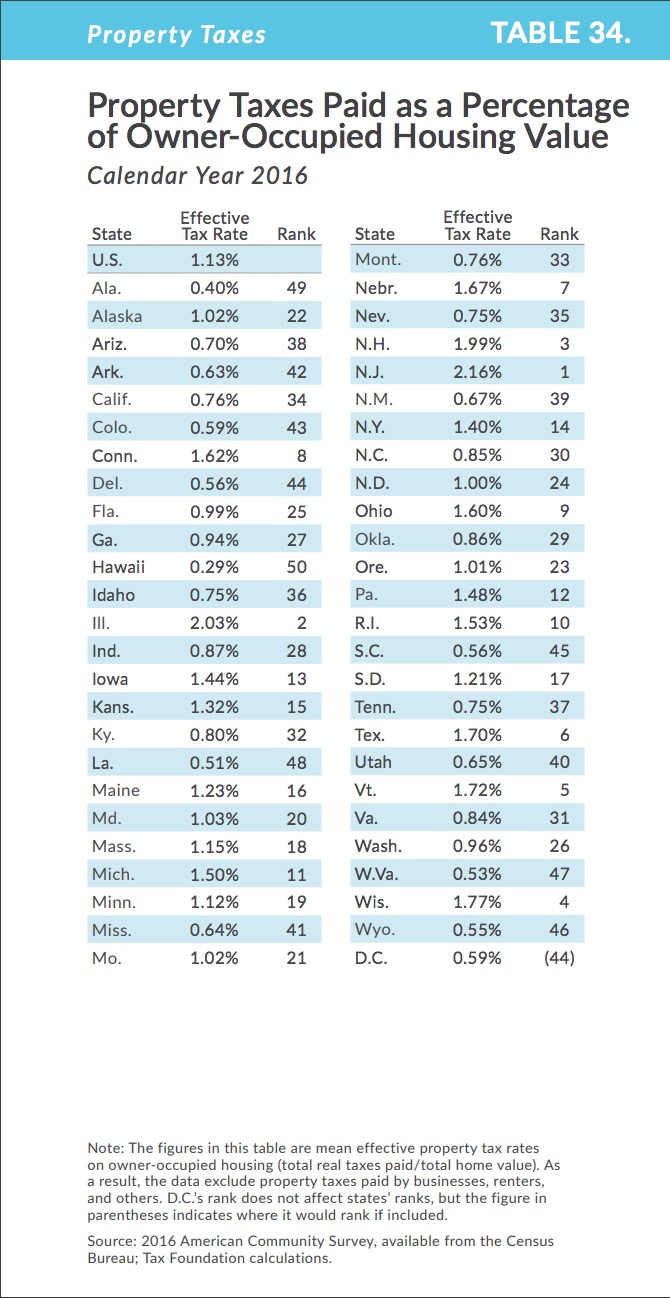
You’ll often hear some people say that they “pay” for the beautiful weather and scenery in Hawaii as a sort of euphemism in stating that being a resident in Hawaii has a burden of expensive costs. But in fact, Hawaii residents who are homeowners are blessed with the lowest “effective tax rate” on owner-occupied housing in the United States at the rate of 0.28%. Though Hawaii may have a higher overall cost of living, for property taxes, Hawaii homeowners actually have it pretty good.

Each state has its own way of earning revenue to fund local government services that keep the state running smoothly, property taxes and income taxes are just two examples. In Hawaii, we also have a General Excise Tax (sales tax) and a visitor tax (Transient Accommodations Tax), which is part of the reason why property taxes for homeowners in Hawaii are on the lower end.

Source: https://files.taxfoundation.org/20180411102900/Facts-Figures-2018-How-Does-Your-State-Compare.pdf

As you can see from the chart pictured above, in 2018 Hawaii still has the nation’s lowest effective tax rate of 0.29%. Homeowners in the top 3 states pay over 2% on average for owner-occupied housing, New Jersey leads with the highest rate at 2.38%, Illinois is second at 2.32% and third is New Hampshire at 2.15%--even our closest neighbor, California is still at 0.76%, which is more than double Hawaii’s effective tax rate.

In Hawaii, the mean effective property taxes will vary by island and county, as the rates set by each county may vary slightly. Below is a table of the 2017/2018 property tax rate for the counties in Hawaii per $1,000 of property value/taxable land and as you will find, Honolulu County (Oahu) has the lowest rate for Residential Real Property Tax Rates, with Hawaii County (Big Island) having the highest.

Source: http://www.localrealestatehawaii.com/resources/property-taxes/
Posted in Buyer's Guide